Everything You Need to Know About Estonian Culture
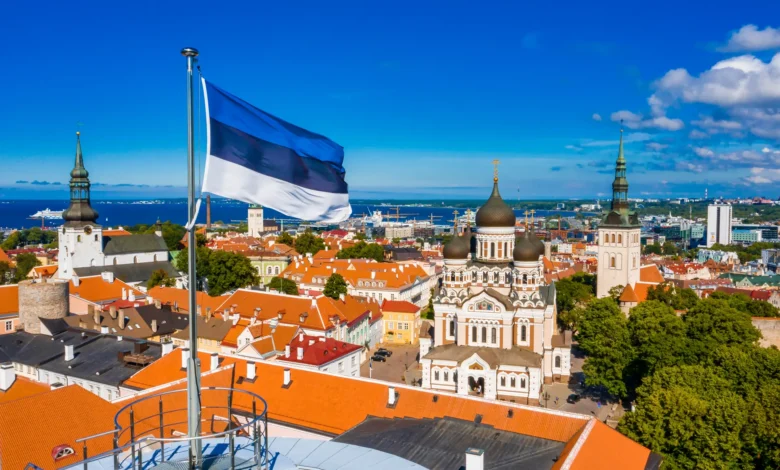
Estonian culture is unique in its East-meets-West character. Nowhere else on Earth will you find a nation that files its taxes online in three minutes and still burns juniper in a smoke sauna the same way its ancestors did seven hundred years ago.
Today, I’m here to share with you a general overview of Estonian culture, so you’re ready when you visit this great country. And yes, this is also one of the most digital-nomad-friendly countries on the planet, and I’ll tell you why further down.
More than hardly any country in the world, Estonia has been a meeting point of so many different people, tribes, nations. Historically, it has been marked by wars, foreign domination, struggles for independence, and so much more.
With the past so rich in rivalries, it is no wonder Estonian culture today is remarkably diverse, complex, and honestly, quite hard to understand for a foreigner. But luckily, I can give you some clues!
The influences that shaped Estonian culture
Let’s go way, way back into the past. The original settlers of these lands were Finno-Ugric speaking tribes, that arrived thousands of years BC.
This is way too long ago for us to say who exactly those people were, but there is evidence to suggest that contemporary speakers of Finno-Ugric languages are genetically related.
To this day, Estonians speak a language that belongs to this group (just like Finns, Hungarians, and Mordvins do).
Does this mean they are far away cousins of Hungarians? Quite possibly, yes. Is Estonian culture similar to the culture of Hungary? Not so much. Which brings us to a very important point.
The significance of language
Can you point Estonia on the map? Say you can (and if you can’t – look it up, you will need that visual).
The countries that surround it are Latvia and Russia. In Russia, they speak a Slavic language, and Latvian is a Baltic language.
Neither of those has much to do with Finno-Ugric languages like Estonian. This meant Estonians were, in a way, isolated, a.k.a. characterized by their language.
When you think about it, an ethnic or national identity is based on what makes us different.
This was also the case for Hungarians and Finns, both of which are nations to which language has an incredibly huge importance. Thus, it is very characteristic of Finno-Ugric people to put language at the center of their national identity.
To put it plainly, Estonians really love and value their language!
But what about the actual foreign influence?
Geographically, Estonians have had plenty of reasons to communicate a lot with neighboring Slavic, Baltic, and Germanic people.
Naturally, you can see a lot of influence from these in Estonian culture. More importantly, though, it has been dominated twice by foreign powers.
Between 1558 and 1710 it was a part of the Swedish Empire. Then it became independent for a while, but soon enough came the Great Northern War, and Peter the Great’s Russian Empire swallowed the country whole for the next two centuries.
Estonia clawed its way to independence in 1918, and even that wasn’t handed over politely. The declaration came on 24 February 1918, one day before German troops marched into Tallinn and refused to recognize the new state at all.
It took Germany’s own defeat in World War I, then a bloody two-year War of Independence against Bolshevik Russia and German-backed militias, before Estonian sovereignty was finally locked in with the Tartu Peace Treaty in February 1920.
Then came 1939, the Molotov-Ribbentrop Pact, and history at its most vicious. Soviet troops occupied Estonia in 1940. A brutal Nazi German occupation followed from 1941 to 1944.
Then the Soviets came back and stayed until 1991. Between the two occupying powers and the war itself, Estonia lost somewhere between one-sixth and a quarter of its entire population through executions, deportations, forced conscription, and people fleeing west and never coming home.
The decades that followed saw the Soviet secret police hunt down anyone who defended Estonian identity too loudly, and the regime shipped in Russian-speaking settlers by the tens of thousands while deporting Estonians to labor camps in Siberia, many of whom never made it back.
That’s a large reason why Estonia has a sizeable Russian-speaking minority today, and why that minority’s place in the country remains complicated. (Read more about Russian culture here).
Estonia restored its independence in 1991, and it hasn’t looked back since.
Estonia Today
Nowadays, Estonia is free and independent. It is one of the fastest-developing countries in Europe (nicknamed the Baltic Tiger) and is also one to implement wonderful innovations everywhere.
For instance, it has the second-best public WiFi in the world. This basically means that you get free, high-speed WiFi practically everywhere in the country.
Some other cool things are that they were the first to implement online voting, they have E-residency since 2014 (and were also the first to introduce it).
Also, Skype was created in Estonia. Just a little fun fact for you.
And that digital-nomad-friendly reputation I promised to explain? Estonia was one of the first countries to introduce a Digital Nomad Visa, letting remote workers and freelancers live in the country for up to a year, provided they can prove a minimum monthly income earned outside Estonia.
And here’s a fact that will probably surprise you: Estonia is constantly ranked among the least religious countries on the planet. A 2026 government-commissioned survey found that just over half the population claims no religious affiliation at all. Also, older Gallup polling put the share of Estonians who say religion matters in daily life at just around 14 percent, lower than almost anywhere else Gallup has measured.
But before we jump into food, customs and traditions, and dating, there is one influence on Estonian culture that we failed to mention.
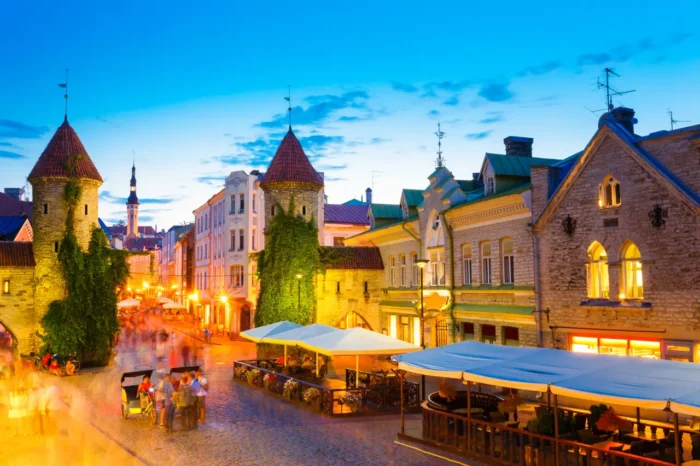
Those are the Baltic German tribes that ruled over these lands during the middle ages. It is really interesting to see how much of the traditionally Baltic German town layout is still present in Estonian cities. There are also plenty of buildings that look typically Germanic.
Centuries of imposed religion probably has something to do with that.
Estonian Food

One of our first encounters with any foreign culture is always the food. So let’s take a minute to review typical Estonian cuisine (and maybe mention the origins of these dishes, too).
First off, thinking of what Estonia looks like, there are a lot of forests, lakes, and a very, very cold sea. The climate is chilly-ish, so it makes sense that Estonians would look toward richer, heartier foods.
And indeed, Estonian food is very much meat- and carb-based, with potatoes and rye bread being the carb staples in the diet. The meat of choice is definitely pork, with fish and seafood also being very popular, especially in coastal regions.
Something you should definitely taste during a trip to Estonia is their fabulous black rye bread.
I’m saying fabulous, but the reason it is so popular is not it’s low glycemic index and how good it is for your body, but because wheat was expensive and it didn’t grow particularly well in these lands.
Hence, rye bread it was. The joke is on the medieval rich guys because the poor were actually eating much healthier.
Sweets
If you think you love bread, try the wonderfully weird leivasupp, that is bread and apple based (yup, you read right).

It is sweet, cinnamon-flavored, and very hearty due to the added sour cream (a very Scandinavian seasoning). You can also see it made with other fruits, like prunes, pears, plums, or cranberries.
While we are at it, another signature Estonian dessert is kama. This is a classic example of Scandinavian (or more like Finnish and some don’t consider that Scandinavian) influence.
It is a mixture of finely ground barley, rye, oat, and (weirdly enough) pea flour. In the past, kama was a way for travelers to have something that will not perish and turns into a filling meal with just some water (and maybe butter if you wanted to be fancy).
Today, kama is a beloved dessert and breakfast food in both Estonia and Finland (where it is known as talkkuna).
The most typical way to prepare it is with buttermilk or half-and-half, topped with blueberries and sweetened with honey.
There is a variety of ways to prepare it though, and even a kama-dedicated place in Tallinn – the infamous Kamahouse.
Main dishes
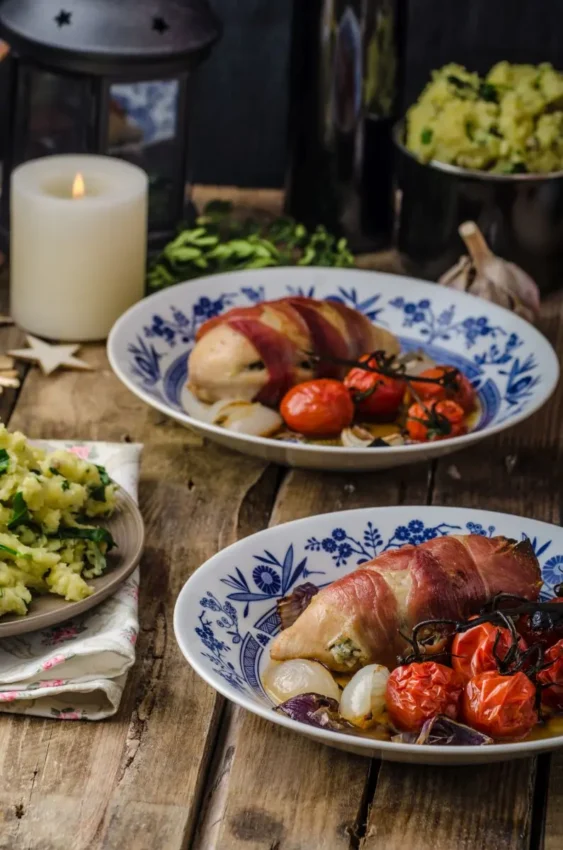
When it comes to savory dishes, mulgipuder is a simple, warm, and comforting porridge made with groats and potatoes.
It is quintessentially Estonian, without an equivalent in any other cuisine. The trouble here is that it’s mostly a peasant dish, meaning that you will find it in some traditional taverns, but not necessarily in most restaurants.
Be sure to check the menu to make sure you will get to try it. Also, did I mention it’s served with bacon on top? Yup, it is perfect.
Finally, a suggestion for the bravest of foodies is süit – a jellied pork pudding, that looks weird and doesn’t smell too pleasant either. It is a local favorite though.
Show some bravery and try it out, you will discover it’s actually pretty dang yummy. Just try not to think of how it’s made out of pork legs, ears, and heads. And now this is all you’re going to think about.
Sorry!
The Sauna Isn’t a Spa Trip Here, It’s a Way of Life
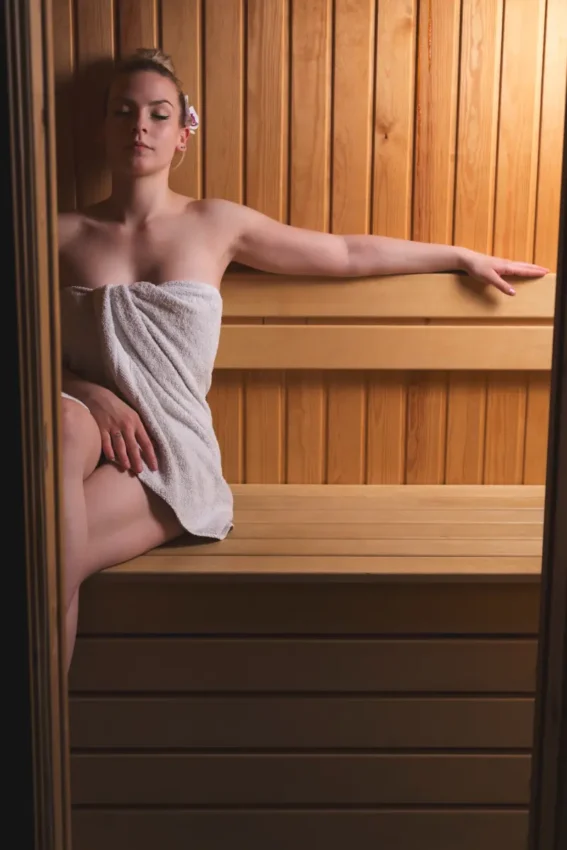
Estonians have been building saunas since at least the 13th century, and this is the place where families cleanse, heal, gossip, and occasionally settle arguments – sometimes all in the same sitting.
Jokes aside, the most authentic Estonian sauna is in Võrumaa, in the south of the country, where the smoke sauna tradition earned UNESCO Intangible Cultural Heritage status in 2014.
It sounds strange, but it works. Smoke fills the room as the wood burns, then clears out before anyone climbs in, leaving behind a dark, smoky-smelling room that you either enjoy or not.
And if that’s not enough, you beat yourself and each other with a bundle of birch branches called a viht, which is closer to a full-body reset button than the punishment it might first sound like.
Etiquette & More
Estonians have a reputation for being reserved, and this is one of the stereotypes that is, at least based on my experience with locals, well earned.
Silence here is not awkward, though. Estonians are perfectly comfortable riding an elevator, standing in a queue, or sharing a sauna bench without saying a single word. Actually, it would be more uncomfortable for them to go for the small talk present in many other Western countries.
So if an Estonian does start talking to you unprompted, take it seriously, because they didn’t have to.
And even this makes them seem cold, they’re not. Actually, Estonian culture is very tolerant and forgiving of others. Even more so, once an Estonian decides you’re worth talking to, they’ll go out of their way to show off their motherland and heritage.
Estonians are proud of what they have and love talking up their nature, architecture, art, and food, once you’ve earned the conversation.
As for family, this is not a conservative country. Estonia consistently posts one of the highest divorce rates in the European Union.
So single parents and blended families made up of kids from different marriages are common rather than unusual.
That extends to dating too. Estonians tend to be fairly open-minded about relationships and hold a fairly relaxed outlook on non-traditional setups compared to a lot of Europe.
People still love spending time in nature together and plenty of families keep a countryside cottage that they bring the kids to every summer.
Summing up Estonian culture
Estonia has a rich and dramatic history. It has only been a few decades of independence for Estonians, but they are embracing their national identity, as well as the values of modern-day life. Now that you know a bit more about them – off you go!
Explore this beautiful country, live it, and love it!